Polish Paczki Day
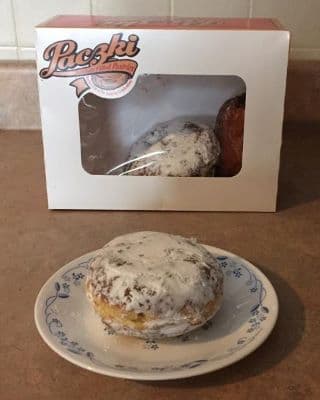
About Polish Paczki Day
When is Paczki Day? In Poland: Celebrated on Fat Thursday, the Thursday before Ash Wednesday. In the United States: Celebrated on Fat Tuesday, the Tuesday before Ash Wednesday.
Today is Polish Paczki Day. The Paczkek has been around for a long time. It was created in the Middle Ages when the King of Poland brought French chefs into his castle to make pastries for Shrove Week. Shrove Week began on Fat Thursday, the Thursday before Ash Wednesday, and the start of Lent. The week ended on Fat Tuesday, the Day before Ash Wednesday. This super sweet treat became instantly popular in Poland, and it almost immediately became a tradition to eat Paczki on Fat Thursday in Poland. Fat Thursday soon became also known as Paczki Day.
How to pronounce it: Punch-Key
Did You Know? The largest Paczki Day celebration is held in Buffalo, NY., complete with a parade.
Don't Call it a Donut!
On the outside, the visual appearance of Paczkek looks very much like a donut. It is fried in oil, like a donut. However, don’t mistake it for a donut. The dough used to make Paczki consists of richer, somewhat different ingredients. It contains more sugar and eggs. It also has a little grain alcohol, which keeps the oil from penetrating deeply into the dough. This gives them a fluffier composition. Properly made, it is also larger and rounder than a donut.
During the Middle Ages, Paczki people first filled with pork fat. It didn’t take long for bakeries and common folk in the Middle Ages to begin using sweet fillings, including prunes, apricots, raspberries, lemons, and custard. Over a few hundred years, many other sweet fillings came into use. Today, we have gluten-free Paczki available, too. The finished product is either glazed on the outside, dusted, or rolled in powdered sugar.
Did You Know? Paczki is the plural form of the word. The singular form is “paczek”. If you ever see it spelled as “Paczkis”, it is incorrect!
The Pre-Lenten Celebration and History
In the Middle Ages, it was popular for Christians to empty their cupboards of lard, sugar, eggs, fruit, and other sweets in the week before Ash Wednesday. Beginning on Fat Thursday, they would have a feast on these leftovers, before the fasting season of Lent began. Paczki was one wonderfully sweet way to use up some of these supplies. On this day, people did not eat just one paczek. They ate several.
In Poland, Paczki Day has always traditionally been celebrated on Fat Thursday. As Polish pilgrims came to America, they brought Paczki and the tradition of Paczki Day with them. Somewhere along the way, for some unknown reason, people began celebrating Paczki Day on Fat Tuesday.
If you’ve never had Paczki, today is your once-a-year chance to enjoy them. You’ll most likely need to go to a Polish bakery and stand in a cheerful line of patrons, waiting patiently for their chance to select among several or more fillings. You may find a few other stores that sell them, but you’ll miss the pleasant experience at your local Polish bakery.
For the diet conscious – Not to put a damper on your enjoyment of this day, but a single paczek has loads of calories and carbs. Our study found it has 329-480 calories and 49-55 carbs. After consuming them, it might be best to head straight for the gym!
If you are going to participate in Paczki Day, make sure to pronounce it correctly. It sounds like “Punch-Key”.
Paczki are properly consumed just one day of the year, on Paczki Day. To properly make them, bakeries prepare them fresh on Paczki Day. Most bakeries follow this practice. It results in long lines at the bakery. When the bakery runs out, they’re out until Paczki Day next year.
How to Celebrate Polish Paczki Day
Like any food holiday, this is a day to enjoy a delicious treat. Despite the high carb and calorie count, eat a few of them today. Then, you can diet tomorrow.
- Today, it’s all about Paczki. Find a Polish bakery and buy a dozen for you and your family.
- Buy some and bring them to your workplace to share with your coworkers.
- Give some to your friends. They will love them. While they are enjoying a paczki, tell them a little about Polish customs around the Lenten and Easter season.
Today's Quote
“Whenever you do a thing, act as if all the world were watching.” – – Thomas Jefferson
History and Origin of Polish Paczki Day
We know a lot about Paczki and its origin. However, we know very little about the creation of this holiday.
We do know that Paczki Day in Poland started in the Middle Ages. Poles celebrate it on Fat Thursday. Fat Thursday probably became known as Paczki Day, as it sounds so much better than Fat Thursday. Then, like any other fun holiday, Paczki Day spread to the United States and many other countries in the world.
It is a mystery why the United States celebrates it on Fat Tuesday rather than Fat Thursday, as celebrated in Poland where it originated.
Other Polish Holidays
Besides Paczki Day, other Polish holidays are always fun celebrations. Here are a couple more for you to celebrate and enjoy:
More About Today
This Day in History – Indeed, many other important events occurred on this date. See what happened on this date in history.
Famous February Birthdays – Did you ever wonder what famous people share your birth date? If so, then find out now!
Ecards – Send a free Ecard daily for Polish Paczki Day or just about any February calendar holiday, occasion, observance, or event. Without a doubt, it’s fun for both the sender and the recipient.
Flower of the Day: Easter Lily
Recipe of the Day: Buffalo Chicken Wing Dip
Holiday Insights, where every day in February is a holiday, a bizarre or wacky day, an observance, or a special event. So, please join us in the daily calendar fun each and every day of the year.
Did You Know? Furthermore, in addition to Polish Paczki Day, there are literally thousands of daily holidays, special events, and observances, more than one for every day of the year. and many of these holidays are new. People and organizations are creating new holidays regularly. February holidays are no exception. Consequently, at Holiday Insights, we take great efforts to thoroughly research and document the details of each one, as completely and accurately as possible.